 Ushuaia City Guide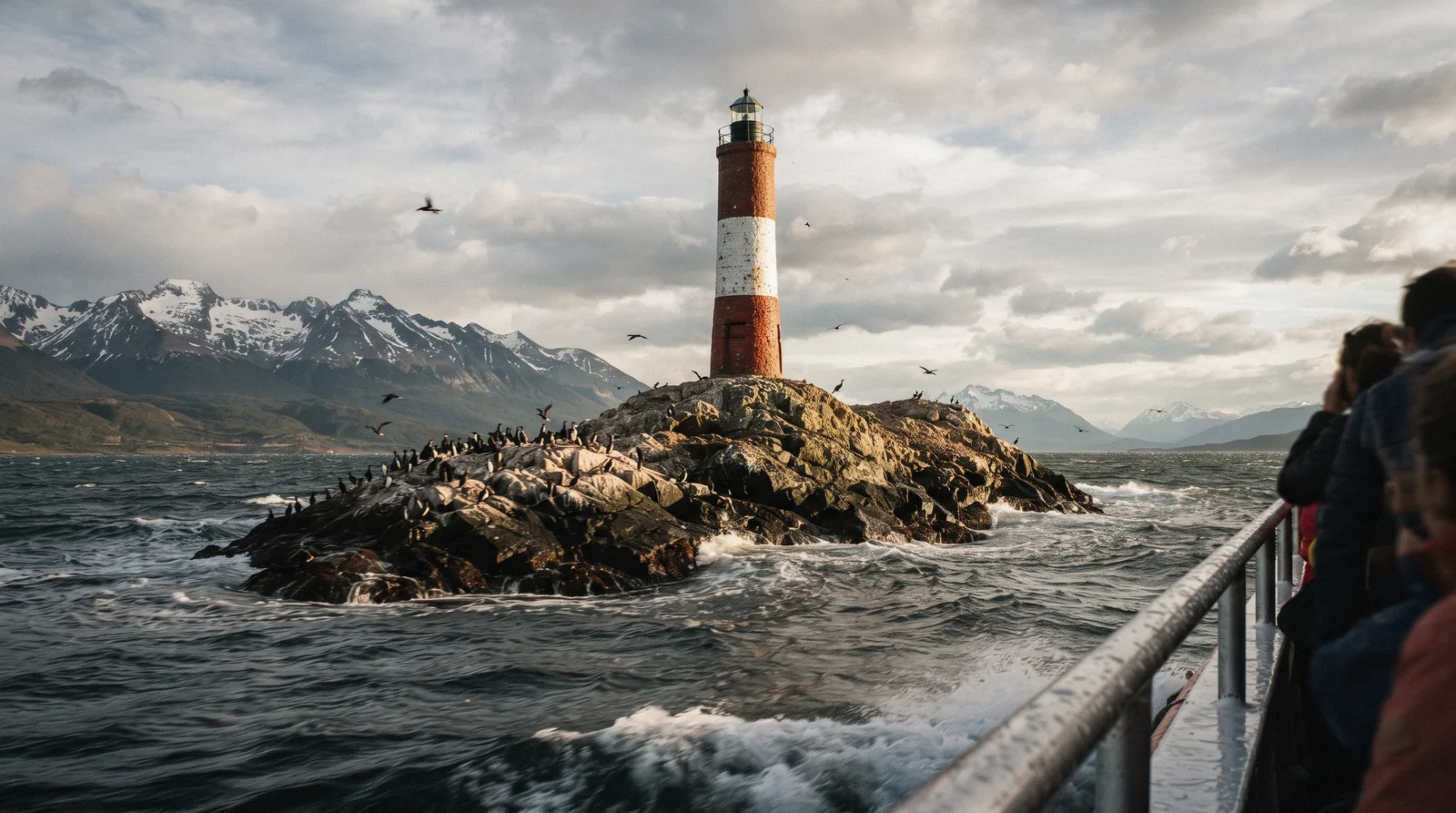
Les Éclaireurs Lighthouse: Ushuaia's Lighthouse on the Rocks
The Les Éclaireurs lighthouse is the red-and-white tower on a rocky islet about 5 nautical miles east of Ushuaia, and the payoff of every classic Beagle Channel sailing. This page explains what it is, what it is not, and how to see it from the water. The whole guide starts on the Ushuaia city guide.
Quick answer How to see the Les Éclaireurs lighthouse from Ushuaia
You see the Les Éclaireurs lighthouse from the water. It stands on the Les Éclaireurs islets in the Beagle Channel, about 5 nautical miles east of Ushuaia, and every classic 3-hour navigation out of the municipal pier area passes it. There is no landing and no entry fee. The tower was lit in 1919 and is unmanned and solar-powered today. Sailings list from $66.30 for the classic navigation. The common claim that this is the 'lighthouse at the end of the world' from Jules Verne is a tourist myth. That lighthouse is San Juan de Salvamento on Isla de los Estados, far to the east.
Key takeaways
- Book the classic navigation from $66.30, 3 hours, and the boat passes the tower. No landing, ever.
- The real 'Faro del Fin del Mundo' is on Isla de los Estados, not here. Read the Verne section below before you buy the postcard.
- Want penguins on the same day out? Compare the sailing options on our penguins page.
- The full channel picture, islands and routes, sits on the Beagle Channel page.
Key facts
Opening hours
| Viewed from sailings | 09:30–17:00 |
|---|
Admission
- Adult
- No entry fee; the 3-hour sailings that pass it list from $66.30
- Reduced
- Not stated
- Free
- Viewing from the water only
Planning it
- Time needed
- Part of a 2.5-3 hour navigation
- Book ahead
- Optional — walk-up usually fine
- Address
- Les Éclaireurs islets, Beagle Channel, about 5 nautical miles east of Ushuaia
Sailing Tickets Compared
How much channel time do you want around the lighthouse pass? There is no official single seller of lighthouse passes, because the lighthouse itself has no entry system. You buy a place on a channel navigation, and the official municipal tourism site only lists navigation operators rather than selling tickets directly. The table compares the sailings we track that pass the Les Éclaireurs lighthouse, with prices and durations taken from each tour listing. Pick by how much channel time you want around the lighthouse pass.
| Option | Price | Duration | Rating | Operator | Book |
|---|---|---|---|---|---|
| Official channel navigation listings; For travellers who want to book direct with a licensed operator rather than through a platform | From $66.30 listed | 3-hour classic route | Not stated | Various licensed operators | Official site |
| Beagle Channel Catamaran Cruise; For the cheapest way to the lighthouse pass with a short hike on Karelo Island included | $66.30 | 3 hours | 4.6 (526 reviews) | Tolkeyen Patagonia Turismo | Check Availability |
| Navigation through Beagle Channel & Bridges Islands; For anyone who wants the long-running standard route with Bridges Islands added | $90 | 3 hours | 4.6 (99 reviews) | Gray Line Argentina | Check Availability |
| Beagle Channel & Sea Wolves Island Catamaran Cruise; For sailors who want an optional 20-minute viewpoint hike after the islands | $120 | Not stated | 4.6 (452 reviews) | CANOERO CATAMARANES | Check Availability |
| Beagle Channel navigation to Isla de los Lobos; For late deciders watching the discount tier on the traditional Isla de los Lobos run | $100.32 | 3 hours | Not stated | Funny Times Travel & Tours | Check Availability |
Prices and durations are the tour listings' own figures, checked against the listings on 2026-09-20. Channel crossings run subject to weather, and operators can move or cancel sailings in strong wind. The official row points at the municipal tourism site, which lists operators but sells nothing itself. Figures current for 2026.
Sailings That Pass the Lighthouse
These are the sailings we track whose route includes the pass by the Les Éclaireurs lighthouse. Durations and prices are the tour listings'.
 from $66.30
Best seller
from $66.30
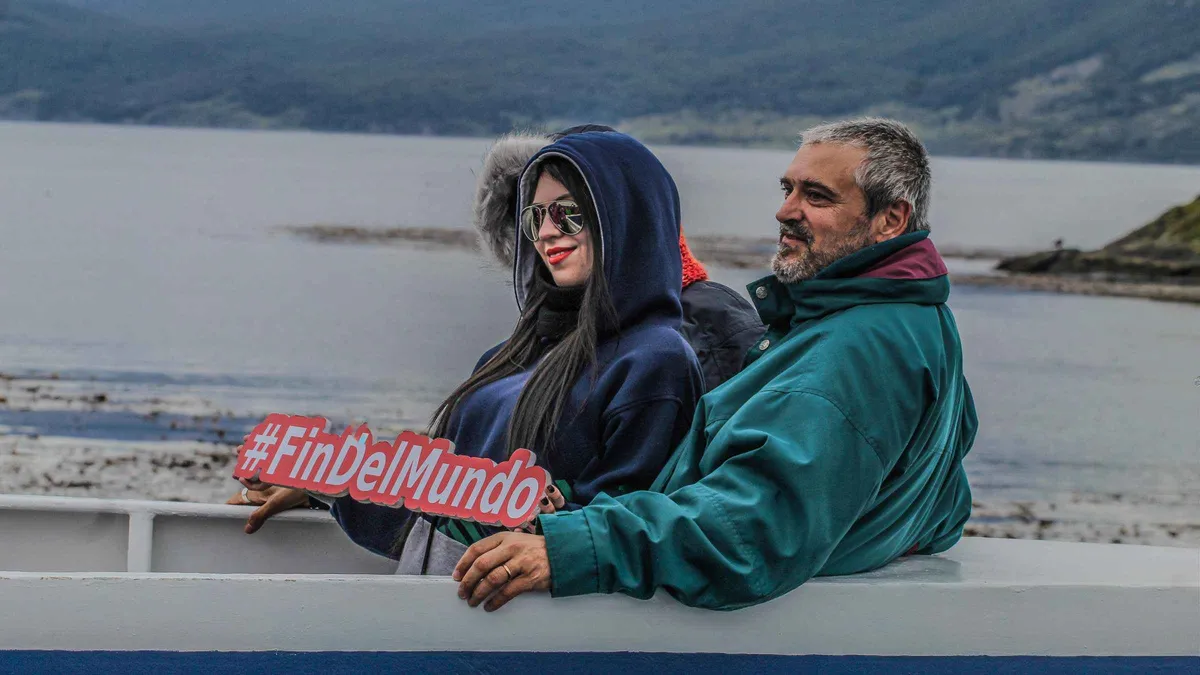
Best seller From Ushuaia: Beagle Channel Catamaran Cruise
The classic three-hour channel crossing to the sea lion colony at Isla de los Lobos and the bird islands, passing the Les Éclaireurs lighthouse. The shortest way to say you have sailed the Beagle Channel.
Check Availability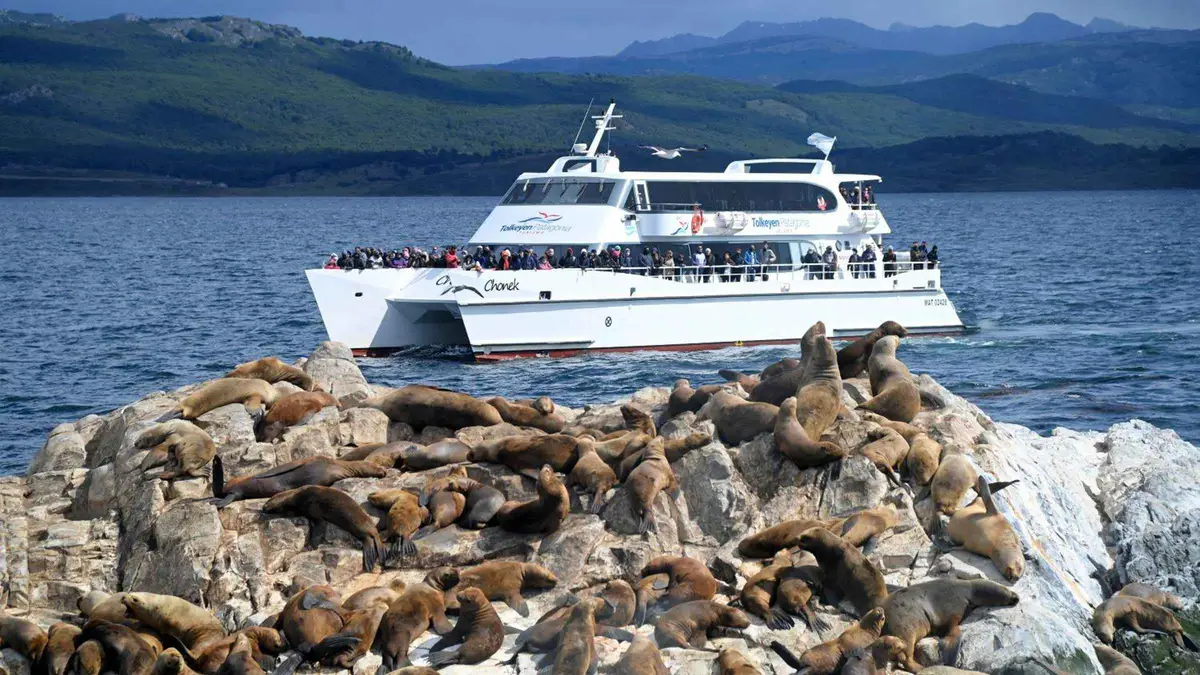 from $90
Ushuaia: Navigation through Beagle Channel & Bridges Islands
The long-running standard navigation: Bridges Islands, the sea lion rocks, cormorant colonies and the lighthouse in three hours. Dozens of departures a day in high season.
Check Availability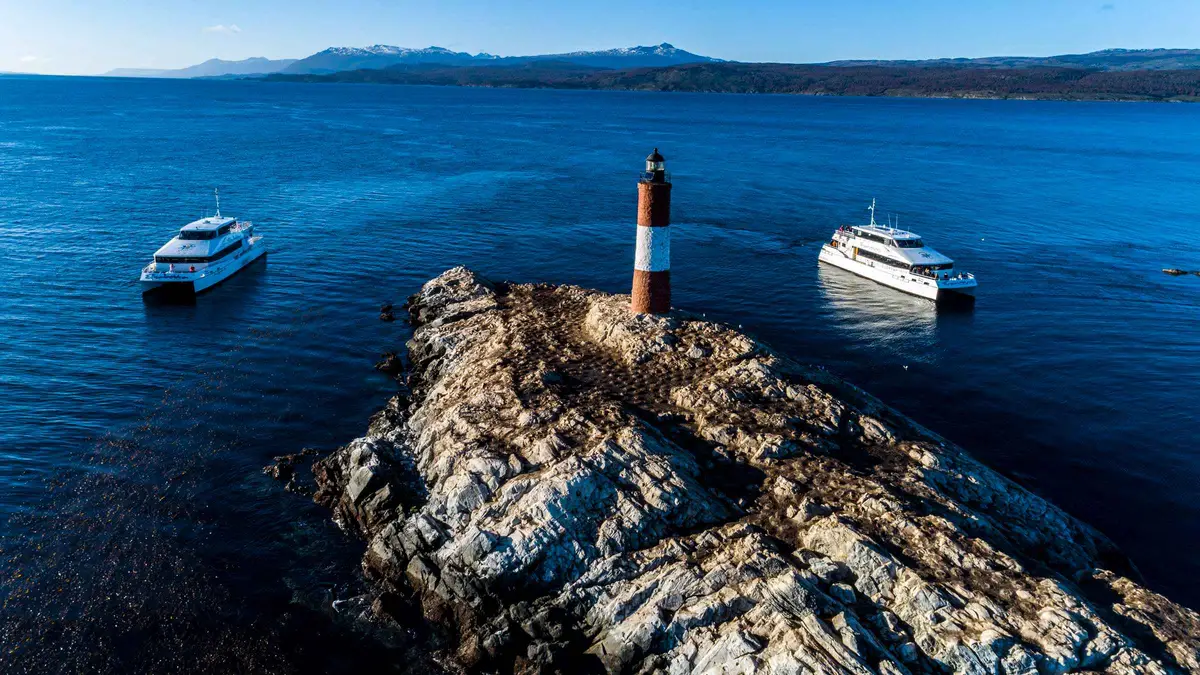 from $120
Ushuaia: Beagle Channel & Sea Wolves Island Catamaran Cruise
A shorter two-and-a-half-hour version that concentrates on the sea wolf island and bird colonies. Suits late arrivals and cruise passengers working around a sailing time.
Check Availability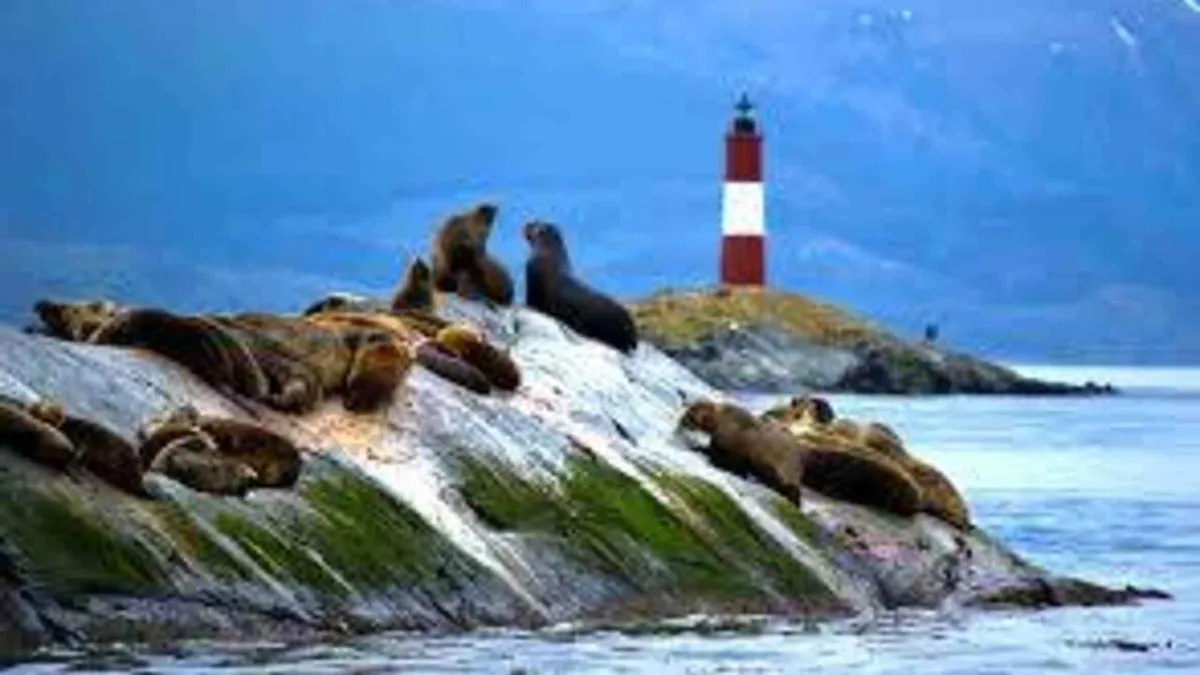 from $100.32
Beagle Channel navigation to Isla de los Lobos
Same channel itinerary to Isla de los Lobos with a Spanish and English crew. Watch the discount tier, which makes it one of the cheapest afternoons on the water.
Check AvailabilityPrices, ratings and details are the platform's own. dollar figures are the listed prices — the platform bills in your account's currency.
The Tower Itself
Strip away the postcards and the Les Éclaireurs lighthouse is a small working aid to navigation on a guano-whitened rock. Knowing what it actually is makes the boat pass more interesting, and it stops you repeating the wrong story when you get home.
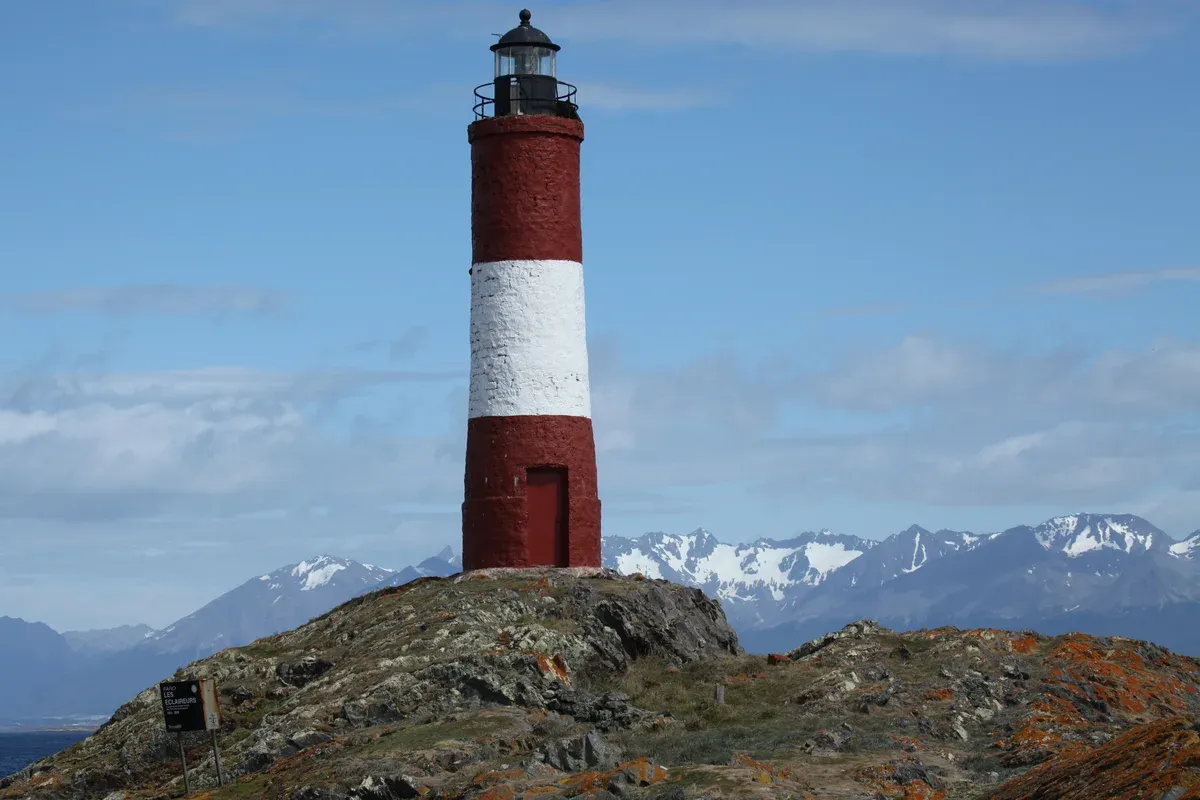
Les Eclaireurs from the water: every classic three-hour navigation passes the tower without landing. Photo: Liam Quinn from Canada, CC BY-SA 2.0, via Wikimedia Commons
Built in 1919, on the lowest islet
The Argentine naval service put the tower into service in 1919. It stands on the lowest islet of the Les Éclaireurs group, a scatter of rocks and small islands in the Beagle Channel about 5 nautical miles east of Ushuaia. The tower is a brick and concrete construction, painted in the red and white bands you see on every postcard in town.
A reported visibility figure of 10 nautical miles circulates for the light, and we pass it on as reported rather than as an official specification, because no official Argentine naval page publishes a current data sheet in a form we can quote.
Unmanned and solar-powered
Nobody lives here. The tower is unmanned, and it runs on solar power today. There is no keeper's cottage to photograph, no ticket office and no jetty for tour boats.
That is why every visit is a pass-by: the catamarans slow down, swing close to the rocks so both sides of the deck get a view, and carry on to the sea lion and bird colonies. If a listing implied a landing, treat it with suspicion. The islets are protected as a wildlife area and the colonies on the neighbouring rocks are the reason boats keep their distance.
What the light actually does
The light marks the rocks for local traffic and marks the eastern approach to Ushuaia's harbour waters. For visitors it marks something else: the moment in a channel sailing when everyone on board crowds to one rail. Crews usually make two passes, once on the way out and once on the way back, so a missed photo on the first pass is not a disaster.
Hold your position on the windward side for the second one.
The colonies on the neighbouring rocks
The rocks around the tower carry two of the channel's reliable colonies. Cormorants nest here in numbers, both imperial cormorants and rock cormorants, and their white droppings are what bleach the islets so starkly in photographs. Sea lions haul out on the neighbouring rocks too, and boats give them a wide, slow arc.
Passengers occasionally report dolphins in the channel on calm days, though no schedule or guarantee exists for that. Keep the camera ready through the whole pass, not just for the tower.
Facts drawn from the municipal tourism site and the Wikipedia record for the lighthouse.
The Lighthouse at the End of the World Confusion
This is the single most useful thing to understand before you step on a boat in Ushuaia. The tower you will photograph is not the lighthouse in the famous novel. The mix-up is now baked into the town's souvenir economy, so it pays to know the real story.
The real Faro del Fin del Mundo is 180 miles east
Jules Verne's 1905 novel 'Le Phare du bout du monde', published after his death, is set at a lighthouse on Isla de los Estados, the island off the Atlantic end of Tierra del Fuego. The building Verne used is the San Juan de Salvamento lighthouse, built in 1884 and decommissioned in 1905. That structure, a modest wooden and iron building on a bleak headland, is the genuine 'Faro del Fin del Mundo', the Lighthouse at the End of the World.
It sits on Isla de los Estados, which is far beyond the reach of any Ushuaia day sailing, and reaching it is a serious expedition, not a three-hour cruise.
How the postcard tower got the nickname
The Les Éclaireurs lighthouse is the one Ushuaia visitors can actually see, and over the decades it quietly inherited the nickname. Tour operators call the pass the 'End of the World lighthouse' stop, postcards print the name across the tower, and the souvenir stamp sold in town says Fin del Mundo regardless of which lighthouse it pictures. The confusion is harmless for photography but it is factually wrong, and the municipal museum world knows it.
The Museo Marítimo even displays a replica of the true Faro del Fin del Mundo, which you can read about on our Museo Marítimo tickets page.
Why it matters to your booking
It matters in three small ways. First, if a tour title promises the 'End of the World lighthouse', it almost certainly means the Les Éclaireurs pass, not Isla de los Estados, so read the itinerary. Second, if the real thing is on your list, you need to know that no standard Ushuaia sailing goes there, and our page does not pretend otherwise.
Third, the history is a good story for the boat. The 1884 San Juan de Salvamento light predates this tower by 35 years, and Verne never saw either finished the way fiction remembers them.
Novel and lighthouse history per the Wikipedia record for the lighthouse and the official Ushuaia tourism site.
How to See It
There is exactly one way to see the Les Éclaireurs lighthouse, and that is from a boat. This section covers the sailing options, the light conditions, and how to fold the tower into a bigger day on the channel.
Every classic navigation passes it
The classic channel navigations leave from the municipal pier area in central Ushuaia, and all of them route east past the Les Éclaireurs islets. The standard trip is a 2.5-3 hour navigation, with the tower as the turn-around landmark between the bird islands and the sea lion rocks. Our current cheapest listing is the classic navigation at $66.30 for 3 hours.
If you want the same tower with a slightly different island mix, the Gray Line navigation runs 3 hours at $90 and adds the Bridges Islands. Durations and prices are the tour listings'.
No landing, and why that is fine
You do not land at the lighthouse. Nobody does. The islets carry nesting cormorants and hauled-out sea lions, boats keep a legal and respectful distance, and there is nowhere to stand anyway.
The catamarans compensate by slowing to a crawl and rotating slightly so passengers on both sides get their photographs. If landing on something matters to you, note that some sailings include a short hike on Karelo Island or a viewpoint stop, which you can compare in the tickets table above.
Best light and camera advice
The light is best late in the afternoon, when the sun drops toward the mountains west of town and warms the red bands of the tower. Morning sailings get flatter light but often calmer water, which matters more if you are shooting handheld. Bring a telephoto lens or the longest zoom you own.
The boat holds a respectful distance from the islets, so the tower fills a corner of a wide frame and needs a decent zoom to isolate. A polarising filter helps with the grey-green channel water, and a strap you can drop in a hurry helps with the spray.
Combining the tower with penguins
In season, the penguin sailings run the same eastern channel route, pass the lighthouse and continue to Isla Martillo. The colony is occupied for breeding roughly from September or October through April, with the reliable visitor window from November to March, per the official sources on our Ushuaia penguins page. Those trips run about 5 hours, and they cover the tower, the sea lions and the penguins in one booking.
Our estimate is that the penguin sailing is the better value if the colony is open, and the short 3-hour navigation is the better pick outside the season.
Sailing routes and timings per the tour listings and the official Ushuaia tourism site. Penguin season per turismoushuaia.com and terramar.tur.ar.
The Colonies on the Neighbouring Rocks
The lighthouse gets the photographs, but the wildlife on the surrounding rocks is half the reason the pass is worth the fare. Here is what you are actually looking at while the boat circles.
Cormorants, two kinds
Imperial cormorants and rock cormorants both nest on the Les Éclaireurs group and the neighbouring islets. The imperial is the larger bird with the white breast and the striking eye ring, and it nests in tight rows on the flattest ledges. The rock cormorant is smaller and prefers the higher, steeper faces.
Both species leave the rocks white, and from a distance the guano reads as snow, which confuses first-time visitors in summer. The colonies are busiest in the breeding months of the austral spring and summer, and the birds are present year round.
Sea lions on the haul-outs
South American sea lions use the rocks around the islets as haul-outs, and the big males defend the best spots with a lot of noise and very little movement. Boats arc around the colonies slowly, both for the animals' sake and because a wake against a low rock is a photograph wrecker. Pups appear in the austral summer.
As with the cormorants, no landing and no feeding, which is the rule for all protected colonies in the channel.
What else shows up
Passengers and crews regularly report dolphins in the channel on calm days, and the bird list beyond the cormorants includes the kelp gulls and skuas that patrol any seabird colony in Patagonia. None of this is scheduled or guaranteed, and no official page publishes sighting statistics for the route. Treat anything beyond cormorants and sea lions as a bonus.
The reliable sightings are the reason the navigation sells itself. The rest is weather and luck.
Colony descriptions per the official Ushuaia tourism site and tour operator listings for the route.
Dos and Don'ts at the Lighthouse Pass
Short rules for the boat, based on the official guidance for channel wildlife and the way the sailings actually run.
Do
- Book a day ahead in high season. Our advice is to reserve about 1 day ahead, and the best-rated sailings fill first in summer.
- Keep a spare afternoon in your plan. Channel crossings run subject to weather and strong wind moves or cancels sailings.
- Bring a telephoto or your longest zoom. The boat keeps a respectful distance from the islets.
- Dress in windproof layers. It is colder on the water than on the pier, in every month.
- Listen for the second pass. Most boats circle the tower twice, once each way.
Don't
- Do not expect to land. There is no landing at the Les Éclaireurs islets, on any sailing.
- Do not call it the real 'Lighthouse at the End of the World' in front of a guide. That one is on Isla de los Estados.
- Do not feed or throw anything to the sea lions or birds. Protected colonies, no exceptions.
- Do not book a penguin combination outside the November to March window and expect the colony to be open.
- Do not count on a fixed departure time from this page. Operators confirm the exact time at booking.
Five Things Most Visitors Get Wrong
A short list of the misconceptions we hear most about the Les Éclaireurs lighthouse, with the correct facts next to each.
The five corrections
These are the points worth correcting before you board, because they change what you book and what you tell people afterwards.
| Common belief | What is actually true |
|---|---|
| It is the lighthouse from the Jules Verne novel | Verne's 1905 novel refers to San Juan de Salvamento on Isla de los Estados, built 1884, decommissioned 1905. The Ushuaia tower got the nickname anyway. |
| You can climb it or land on the islet | The tower is unmanned, there is no jetty and no entry system. Viewing is from the water only. |
| It needs a keeper | It is unmanned and solar-powered today, per the standard records for the site. |
| It is a short walk from town | The islets are about 5 nautical miles east of Ushuaia in the Beagle Channel. You need a boat, full stop. |
| Any boat trip includes it | The classic channel navigations all pass it, but check each listing. Some specialist trips route elsewhere. |
Sources: official Ushuaia tourism site and the Wikipedia record for the lighthouse.
History of the Lighthouse at the End of the World
Two lighthouses share one nickname. This timeline keeps the real one and the famous one in the right order.
-
1884
San Juan de Salvamento is built
The true Faro del Fin del Mundo is lit on Isla de los Estados, on the far Atlantic end of the island territory.
-
1902
Ushuaia's prison opens
The penal colony that shaped the town grows, and the channel traffic east of the harbour increases with it.
-
1905
Verne's novel is published
'Le Phare du bout du monde' appears after the author's death, fixing the San Juan de Salvamento light in popular imagination.
-
1905
San Juan de Salvamento is decommissioned
The original lighthouse goes dark the same year the novel appears, an irony the souvenir shops never mention.
-
1919
Les Éclaireurs is lit
The Argentine naval service lights the new tower on the islets 5 nautical miles east of Ushuaia.
-
Today
Solar and unmanned
The tower runs on solar power with no keeper, and every classic channel sailing passes it. The nickname has migrated to the wrong lighthouse.
Dates for the prison, the novel and both lighthouses are historical records per the Wikipedia record for the lighthouse and Ushuaia's Maritime Museum.
Map: Where the Lighthouse Sits
The lighthouse is on the water, so the map has three useful pins: the pier where the sailings leave, the islets themselves, and the direction of the real End of the World lighthouse far to the east.
Nearby and Related
Things that pair naturally with a lighthouse sailing, all reachable from the same waterfront.
Beagle Channel
The full channel guide: islands, routes, wildlife and every sailing option we track.
The sailings run out of the centreUshuaia penguins
Isla Martillo's Magellanic and Gentoo colony, in season on the same route past the tower.
Same eastern channel routeCruise port
If you arrive by ship, here is how the pier areas connect to the sailing departures.
Walkable from the cruise terminalsLes Éclaireurs Lighthouse FAQ
Can you land at the Les Éclaireurs lighthouse?
No. The tower is unmanned, the islets have no jetty and no entry system, and viewing is from the water only. Every classic navigation slows and circles for photographs, then moves on to the colonies.
Is this the real Lighthouse at the End of the World from Jules Verne?
No. Verne's 1905 novel refers to the San Juan de Salvamento lighthouse on Isla de los Estados, built 1884 and decommissioned 1905. The Les Éclaireurs tower inherited the nickname from the postcard trade. The souvenir stamp sold in town says Fin del Mundo regardless.
How much does it cost to see the lighthouse?
The tower itself has no entry fee. You pay for a channel sailing that passes it. The listings we track start from $66.30 for a 3-hour cruise, and prices are the tour listings' own figures.
How far is the lighthouse from Ushuaia?
The Les Éclaireurs islets sit in the Beagle Channel about 5 nautical miles east of Ushuaia. That translates into a 2.5-3 hour navigation on the standard route, with the tower as the turn-around landmark.
What time do the lighthouse sailings leave?
Viewed from sailings, the operating window runs roughly 09:30-17:00. The exact departure time is confirmed by each operator at booking, and sailings can move or cancel in strong wind.
Can I combine the lighthouse with the penguin colony?
Yes, in season. The penguin sailings run the same eastern route past the tower and continue to Isla Martillo. The colony is open for visits in the reliable window of November to March, and those trips run about 5 hours.
Videos of the Lighthouse Pass
Three videos that show what the pass actually looks like from the water, so you know what your zoom lens is for.
Beagle Channel Boat Tour | Penguins, Sea Lions & Les Eclaireurs Lighthouse – Ushuaia, Patagonia
A full channel run with the penguin colony and the lighthouse pass in one itinerary, from the Atlas of Elsewhere channel.
Video: Atlas of ElsewhereBeagle Channel, Argentina - Les Eclaireurs Lighthouse
A short, steady clip of the tower on the rocks, useful for judging the viewing distance from the boat. From baaarp.
Video: baaarpFaro Les Éclaireurs 🇦🇷 Lighthouse at the End of the World
Aerial footage of the islets and the red-and-white bands, from the Flying over the World channel.
Video: Flying over the WorldWe may earn a commission if you book through one of our links, at no extra cost to you. Full affiliate disclosure